
Saying “no” sounds simple. It is only one small word, yet for many people who relate strongly to Pisces traits, it can feel surprisingly difficult to say.
You may know that you are already tired. You may have too many responsibilities, need time alone, or simply not want to do what someone is asking of you. However, instead of saying no, you agree.
Then, something uncomfortable happens.
You help the other person, but you feel emotionally exhausted afterward. Sometimes, you may even become frustrated with yourself. You wonder why you keep giving your time and energy when you know you need to protect your own wellbeing.
This pattern is often connected with people-pleasing.
Pisces are commonly associated with empathy, compassion, emotional sensitivity, and a desire to understand others. These qualities can be beautiful strengths. However, without healthy boundaries, the same qualities can slowly become emotionally draining.
Therefore, learning to say no is not about becoming selfish or uncaring. Instead, it is about understanding that your emotional energy has limits.
Why Can Saying “No” Feel So Difficult for Pisces?
People who identify strongly with
Piscean traits may naturally pay close attention to the emotions of others.
You may notice when someone is disappointed.
You may sense when a person feels rejected.
Moreover, you might worry about how your decisions will affect the people around you.
Because of this emotional awareness, saying no may feel much bigger than simply refusing a request. You may imagine the other person becoming upset, disappointed, angry, or distant.
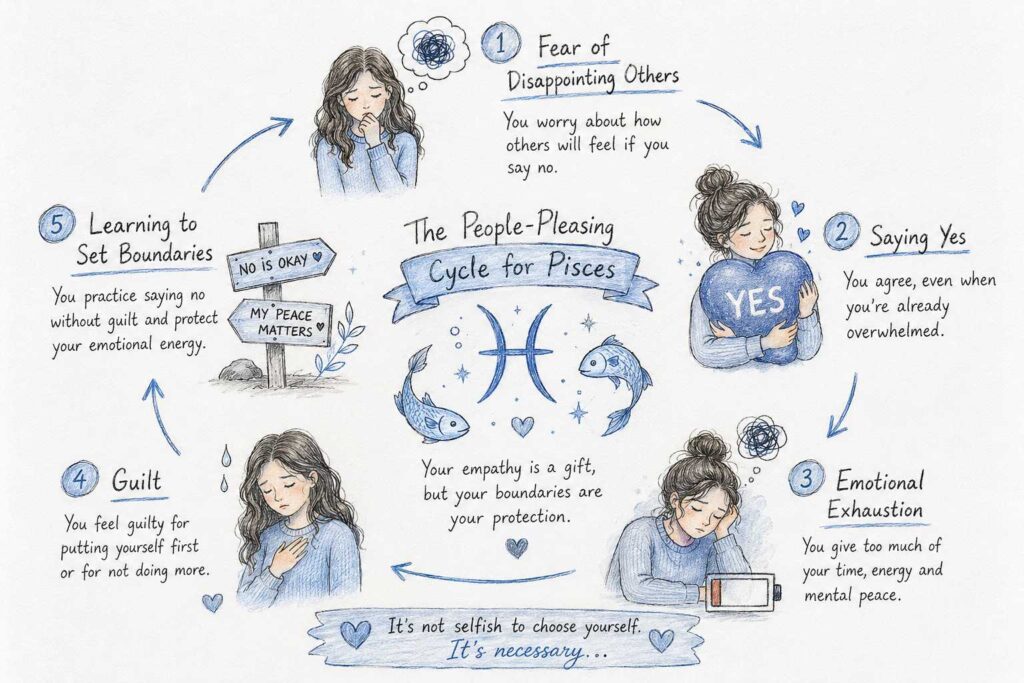
As a result, saying yes can seem like the easiest way to avoid emotional discomfort.
However, repeatedly ignoring your own needs does not create genuine peace. It only delays the problem.
Eventually, emotional exhaustion, frustration, and resentment can begin to develop.
The Difference Between Kindness and People-Pleasing
Kindness and people-pleasing can sometimes look similar from the outside.
In both situations, you may help someone, offer your time, provide emotional support, or make a sacrifice.
However, the motivation behind the action is different.
Kindness usually comes from genuine willingness.
You help because you want to.
People-pleasing, on the other hand, often comes from fear.
You may agree because you are afraid of disappointing someone. Perhaps you fear conflict. You may worry that someone will stop liking you or think negatively about you.
Therefore, an important question to ask yourself is:
“Am I saying yes because I genuinely want to help, or because I feel afraid to say no?”
Your answer can reveal whether your kindness is coming from emotional generosity or unhealthy pressure.
How People-Pleasing Slowly Drains Emotional Energy
People-pleasing does not always create immediate problems.
In fact, at first, it may even make you feel good.
Helping someone can create a sense of purpose and emotional connection. Moreover, receiving appreciation can make you feel valued.
However, problems begin when helping others becomes a constant responsibility.
Imagine that your emotional energy is like a container.
Every conversation, responsibility, decision, conflict, and emotional experience requires some energy.
When you constantly give your time and attention to others without allowing yourself to recover, the container slowly becomes empty.
Eventually, you may experience emotional exhaustion.
You might become unusually irritated, mentally distracted, physically tired, or emotionally disconnected. Interestingly, you may not immediately realize that people-pleasing is contributing to the problem.
You may simply think that you need to try harder.
However, trying harder is not always the solution.
Sometimes, you need stronger boundaries.
The Hidden Fear Behind Saying No
One reason people struggle with boundaries is because they associate saying no with rejection.
You may believe:
“If I refuse, they will be disappointed.”
“If I stop helping, they will think I am selfish.”
“If I create boundaries, people may leave me.”
These thoughts can feel powerful, especially for emotionally sensitive individuals.
However, healthy relationships should not depend entirely on your willingness to sacrifice yourself.
Someone who genuinely respects you should also respect reasonable boundaries.
Of course, people may occasionally feel disappointed when you say no. That is a normal part of human relationships.
Nevertheless, another person’s temporary disappointment does not automatically mean you have done something wrong.
Learning this difference can be an important part of emotional growth.
Why Pisces May Feel Guilty After Setting Boundaries
Sometimes, the hardest part is not actually saying no.
The hardest part comes afterward.
You may replay the conversation repeatedly in your mind.
“Was I too harsh?”
“Should I have helped?”
“What if they are upset with me?”
This emotional overthinking can create guilt.
As a result, you may change your decision and agree to something you originally wanted to refuse.
However, guilt is not always proof that you have made the wrong decision.
Sometimes, guilt simply appears because you are doing something unfamiliar.
If you have spent years putting other people first, prioritizing yourself may initially feel uncomfortable.
Therefore, learning healthy boundaries requires patience.
You are not only changing your behavior. You are also changing the way you think about responsibility, relationships, and self-respect.
Warning Signs That People-Pleasing Is Becoming Unhealthy
Helping others is not automatically a problem.
However, certain patterns may suggest that your generosity is becoming emotionally unhealthy.
For example, you may frequently agree to things you do not want to do.
You might feel responsible for keeping everyone happy.
Perhaps you become anxious when someone seems disappointed with you.
Moreover, you may constantly apologize, even when you have done nothing wrong.
Another warning sign is resentment.
You may continue helping people while secretly feeling angry that nobody recognizes how exhausted you are.
This creates an emotional contradiction.
On the outside, you say yes.
Inside, you desperately want to say no.
Over time, this difference between your actions and your true feelings can damage your emotional wellbeing.
Learn to Pause Before Giving an Answer
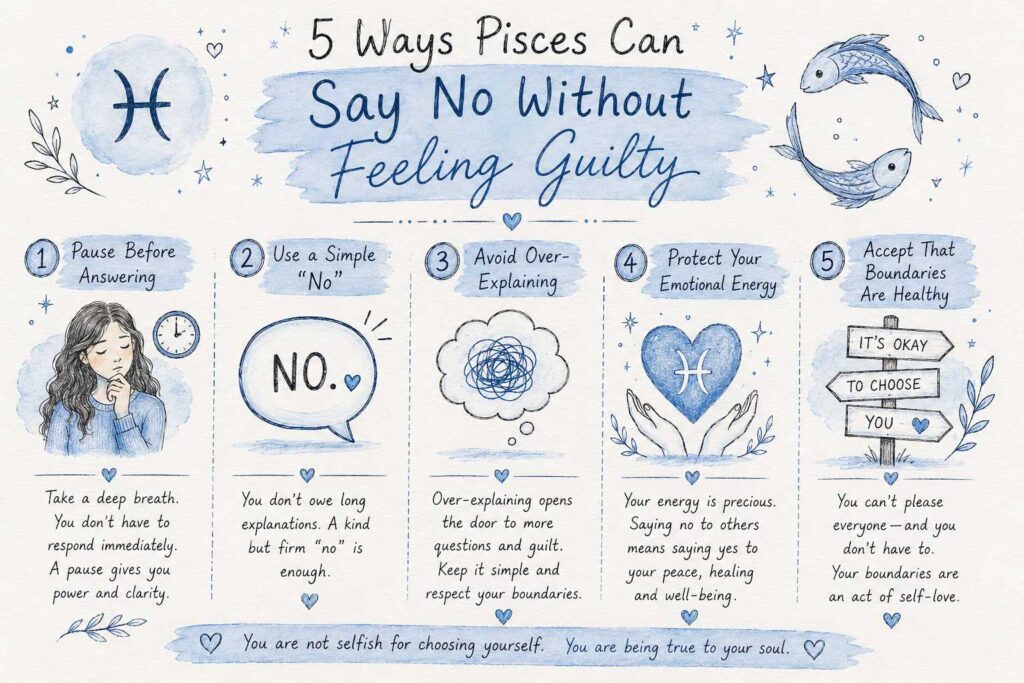
One of the simplest ways to reduce people-pleasing is to stop answering immediately.
When someone asks you for something, you may automatically say yes before considering whether you actually have the time or emotional energy.
Instead, create a small space between the request and your answer.
You can say:
“Let me think about it.”
“I need to check my schedule.”
“I’ll give you an answer later.”
This short pause can be surprisingly powerful.
It gives you time to ask yourself important questions.
Do I actually want to do this?
Do I have enough time?
Will saying yes create unnecessary stress?
Am I agreeing because I genuinely want to help, or because I am afraid to refuse?
By asking these questions, you can make a conscious decision instead of reacting automatically.
Understand That, “No” Does Not Require a Long Explanation
Emotionally sensitive people sometimes feel that saying no requires a detailed justification.
You may create a long explanation because you want the other person to understand your decision.
However, the more you explain, the more you may feel pressured to defend yourself.
A respectful boundary can be simple.
“I’m sorry, but I can’t do that today.”
“I don’t have enough time right now.”
“I appreciate you asking, but I’ll have to say no.”
These responses are polite without being unnecessarily complicated.
Moreover, you do not always need to convince another person that your boundary is reasonable.
Your time and emotional energy are valuable, even when other people do not fully understand your decisions.
Stop Measuring Your Worth by How Much You Give
People-pleasing can sometimes develop from the belief that being helpful makes you valuable.
You may feel loved when people need you.
You may feel important when others depend on you.
However, this can become dangerous if your entire sense of self-worth depends on being useful.
You are more than the problems you solve for other people.Healthy relationships should include mutual care, respect, understanding, and support.
Therefore, ask yourself another important question:
“If I stopped constantly helping this person, would our relationship still feel meaningful?”
The answer may reveal important truths about some of your relationships.
Create Emotional Boundaries Without Losing Your Compassion
Some people fear that boundaries will change their personality.
They worry that saying no will make them colder, less compassionate, or less caring.
However, boundaries do not destroy empathy.
Healthy boundaries protect empathy.
When you constantly give beyond your emotional capacity, you may eventually become exhausted and resentful.
On the other hand, when you protect your energy, you can offer support more genuinely.
Instead of helping because you feel trapped, you help because you consciously choose to.
This makes your kindness healthier and more sustainable.
Accept That You Cannot Make Everyone Happy
This may be one of the hardest lessons for a people-pleaser to accept.
No matter how kind, generous, or understanding you are, you cannot control how everyone feels about you.
Some people may misunderstand your decisions.
Others may become disappointed.
Moreover, certain individuals may react negatively when you begin creating boundaries, especially if they benefited from your lack of boundaries in the past.
However, your responsibility is not to prevent every uncomfortable emotion another person experiences.
Your responsibility is to communicate respectfully, behave with integrity, and take reasonable care of your own wellbeing.
Trying to keep everyone happy is an impossible responsibility.
Eventually, it will leave you emotionally exhausted.
Practice Saying No in Small Situations
You do not have to transform your personality overnight.
Instead, start with small boundaries.
Decline an invitation when you genuinely need rest.
Do not immediately answer every message.
Avoid volunteering for responsibilities when your schedule is already full.
Ask for time before making decisions.
These small actions can gradually build emotional confidence.
Over time, you may discover something important.
Saying no does not automatically destroy relationships.
In fact, healthy boundaries can improve relationships because people begin to understand your limits more clearly.
Protect Time for Yourself Without Feeling Guilty
Rest should not only happen when you are completely exhausted.
You need regular time to mentally and emotionally recover.
For someone who relates to Pisces sensitivity, this may involve quiet reflection, prayer, journaling, spending time in nature, listening to peaceful music, or simply being alone without feeling responsible for anyone else.
Whatever method you choose, personal time should not be treated as something meaningless.
It can help you understand your emotions and regain your mental clarity.
Moreover, when you take better care of yourself, you may have more genuine energy available for the people you truly care about.
Turn Your Sensitivity Into a Strength, Not a Burden
Piscean sensitivity does not have to become emotional exhaustion.
Your ability to care deeply can be a meaningful strength.
However, compassion becomes healthier when it exists alongside wisdom and boundaries.
You can understand someone without solving every problem for them.
You can care about someone without accepting every request.
You can be generous without ignoring your own needs. Most importantly, you can say no while remaining a kind person. These ideas are not contradictions. They are signs of emotional balance.
Final Thoughts: Saying No Can Be an Act of Self-Respect
For Pisces who naturally care about the feelings of others, learning to say no can be uncomfortable.
However, constantly sacrificing your own wellbeing is not the only way to show kindness.
Healthy compassion includes understanding your own limits.
Therefore, before automatically saying yes to the next request, give yourself time to think.
Ask whether you genuinely want to help.
Consider whether you have enough emotional energy.
Most importantly, remember that protecting your inner peace does not mean you have stopped caring about others.
Sometimes, saying no to another person means finally saying yes to your own emotional wellbeing.
And that may be one of the most important boundaries you ever learn to create.