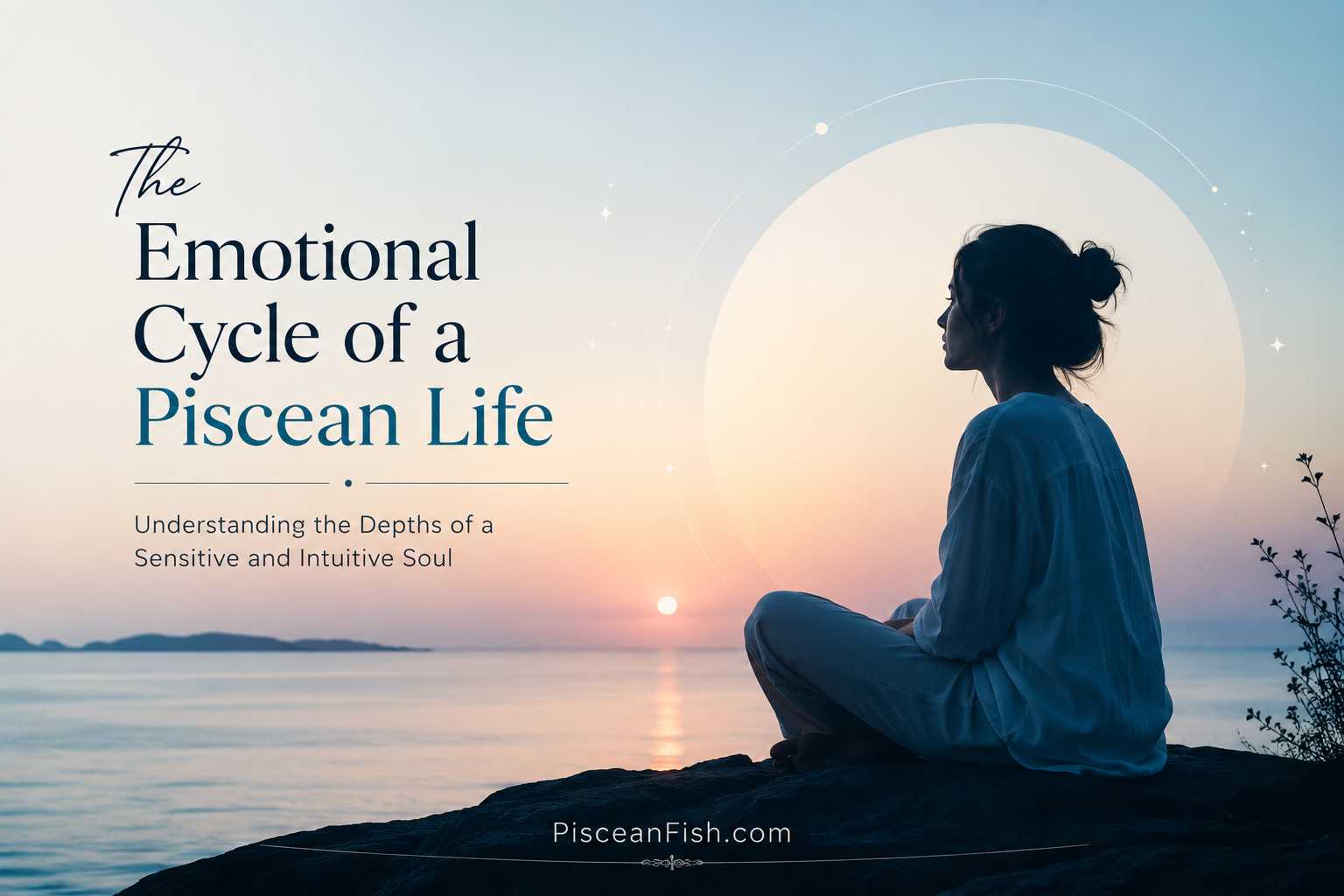
Every person experiences emotions, but a Piscean often experiences them on a much deeper level. Whether or not you believe in astrology, Pisces is commonly associated with compassion, imagination, intuition, and emotional sensitivity. These qualities can become incredible strengths, but they can also create unique challenges.
The emotional journey of a Piscean rarely follows a straight path. Instead, it moves in cycles much like the tides of the ocean. There are moments of peace, periods of self-doubt, phases of growth, and times of complete transformation. Understanding this emotional cycle can help Pisceans appreciate their strengths, recognize their weaknesses, and make healthier decisions in relationships, careers, and personal development.
This article explores the emotional cycle of a Piscean life through a symbolic journey. Rather than treating these stages as fixed personality types, think of them as emotional phases that many Pisceans may experience at different points in life.
A Piscean’s emotions are constantly evolving. They absorb experiences deeply and often carry memories for years. While others may move on quickly, a Piscean usually revisits the past, searching for meaning and emotional understanding.
Their emotional cycle often follows this pattern:
Comfort and emotional security
Fear of change
Inner conflict
Personal transformation
Emotional balance
Self-discovery
These stages may repeat several times throughout life. Each cycle teaches valuable lessons and gradually shapes a stronger, wiser personality.
The Role of Emotions in Piscean Growth
For a Piscean, emotions are not obstacles they are teachers.
Every disappointment teaches resilience.
Every heartbreak teaches wisdom.
Every success builds confidence.
Unlike personalities that grow mainly through competition or ambition, Pisceans usually grow through emotional experiences. Their greatest lessons often come after difficult periods rather than easy ones.
The challenge is learning to use emotions as guidance instead of allowing emotions to control every decision.
The Fear of Losing Identity
One of the biggest reasons many Pisceans resist change is the fear of losing themselves.
They become emotionally attached to familiar routines, relationships, workplaces, and memories. Even when those situations no longer serve them, leaving can feel like losing a piece of their identity.
Questions frequently appear in their minds:
What if I make the wrong decision?
What if I regret leaving?
What if people no longer recognize me?
These fears can delay important life decisions for months or even years.
Fortunately, true transformation does not erase personality. It simply reveals a stronger version of the same person.
When Comfort Becomes a Trap
Comfort provides safety, but too much comfort can limit personal growth.
Imagine a fish living peacefully in a small pond. The pond provides everything it needs, yet it never discovers the vast rivers or oceans beyond.
Many Pisceans experience something similar.
They may remain in jobs that no longer inspire them, stay in unhealthy relationships because they fear loneliness, or postpone dreams because the unknown feels frightening.
Eventually, the comfort zone stops feeling peaceful and begins to feel restrictive.
This realization often becomes the beginning of transformation.
The Chaos Phase of Transformation
Every meaningful change begins with uncertainty.
Before becoming emotionally stronger, many Pisceans experience a confusing period where old beliefs no longer fit but the future remains unclear.
During this stage they may feel:
Emotionally overwhelmed
Confused about life direction
Mentally exhausted
Unsure of their purpose
Although uncomfortable, this phase is necessary.
Just as seasons change before new growth appears, emotional confusion often comes before personal clarity.
The Danger of Over-Transformation
While growth is important, too much change can also harm a Piscean. Because of their adaptable nature, they may:
Change personalities to fit different environments.
Lose their core identity.
Become emotionally exhausted.
Growth is healthy, but constantly reinventing yourself is not.
Some Pisceans become addicted to change itself.
They continuously search for the “perfect” career, relationship, city, or lifestyle, believing happiness always exists somewhere else.
Unfortunately, constant change without purpose often creates instability rather than fulfillment.
True transformation should be intentional, not impulsive.
Relationships and the Piscean Emotional Cycle
Relationships often shape a Piscean’s emotional journey more than any other life experience.
Love inspires them.
Rejection transforms them.
Forgiveness strengthens them.
Heartbreak teaches them.
Because they invest deeply in relationships, every emotional experience leaves a lasting impression.
Healthy relationships encourage confidence and personal growth.
Unhealthy relationships can trap a Piscean in fear, anxiety, and emotional exhaustion.
Learning to choose emotionally healthy relationships becomes one of the most valuable life lessons.
Career Growth Through Emotional Maturity
Career success for a Piscean rarely depends on technical skills alone.
Their greatest achievements usually happen after developing emotional confidence.
As they mature emotionally, they become better at:
Making practical decisions
Communicating clearly
Handling criticism
Taking calculated risks
Leading with empathy
Many Pisceans naturally excel in creative professions, counseling, healthcare, education, writing, spirituality, design, psychology, and humanitarian work because these careers allow them to combine compassion with purpose.
The Power of Self-Acceptance
One of the greatest emotional breakthroughs happens when a Piscean stops comparing themselves with others.
They realize they do not need to become someone else.
They simply need to become the healthiest version of themselves.
Self-acceptance allows them to appreciate both their sensitivity and their strength.
Instead of viewing emotions as weaknesses, they begin using them as tools for understanding themselves and others.
The Silent Strength of a Piscean
Many people underestimate Pisceans because they appear gentle.
Yet true strength is not always loud.
A Piscean quietly survives disappointments that others never notice.
They continue showing kindness after betrayal.
They continue believing in hope after failure.
They continue loving despite heartbreak.
This quiet resilience is one of the most powerful qualities a Piscean can possess.
Final Thoughts: Every Piscean Has Their Own Journey
Every Piscean experiences life differently. Some discover their true potential early in life, while others grow through years of emotional experiences, personal challenges, and quiet self-reflection. There is no fixed timeline for growth, and there is no single path that every Piscean must follow.
The emotional journey of a Piscean is often filled with moments of hope, uncertainty, love, disappointment, healing, and renewal. Each experience shapes their character and helps them understand themselves on a deeper level. Although this journey may sometimes feel overwhelming, it also builds resilience, wisdom, and emotional maturity.
True transformation does not mean becoming a completely different person. It means letting go of limiting fears, learning from past experiences, and embracing new opportunities without losing the kindness, compassion, and intuition that naturally define the Piscean personality.
Personal growth is not measured by how quickly someone changes, but by how much they learn from life’s experiences. Every challenge offers a chance to become stronger, every setback carries an important lesson, and every new beginning opens the door to greater self-awareness.
If you are a Piscean, trust your own journey. Celebrate your progress, no matter how small it may seem. Continue to grow at your own pace, remain open to life’s lessons, and remember that your emotional depth is not a weakness it is one of your greatest strengths when guided by wisdom, balance, and self-belief.